
Stone CNC Router Price in India 2026: Spindle, Bed Size & Features That Affect Cost
The short answer: CNC stone router machine price in India has no fixed figure, because two machines that look alike can differ widely in spindle, frame weight, cooling and support. What you pay is mostly decided by spindle power, bed size, frame rigidity, the water system and the controller. This guide explains each factor, which ones are worth paying for, and how to compare quotations so you do not buy a machine that cannot handle your stone.
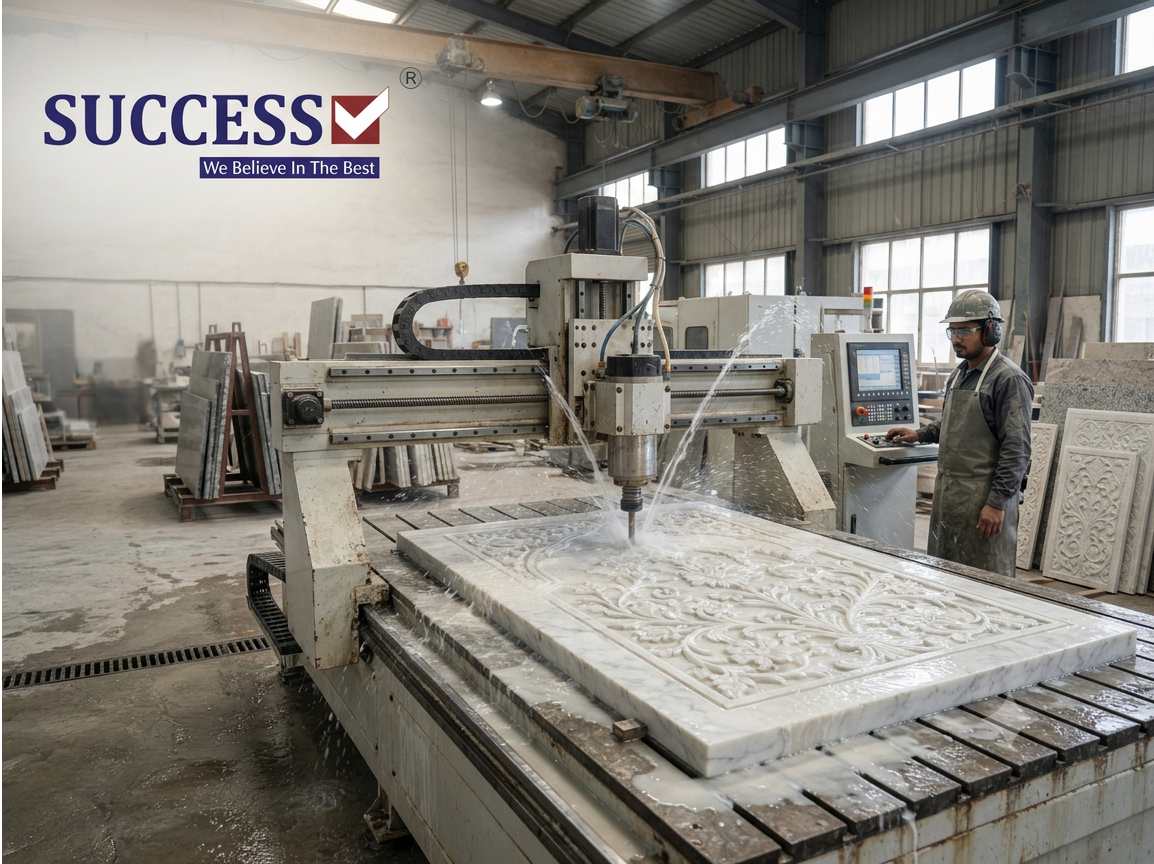
Stone fabricators in Gujarat, Rajasthan and across India are moving from hand carving and saw-based cutting to CNC for tombstones, temple work, name plates, jali panels, sinks and 3D relief. The reason is simple: a CNC machine repeats a design exactly, so one operator can finish work that once needed several skilled carvers. At Success Technologies we manufacture CNC router machines in Ahmedabad, and this article answers the questions stone buyers ask us most.
What Is a CNC Stone Router and What Can It Do?
A stone CNC router is a rigid, computer-controlled machine that moves a spinning tool over a slab or block to cut, carve and shape it. Unlike a wood router, it is built for heavy cutting forces, constant water flow and abrasive dust.
- Cutting: Profiles, cut-outs, sink openings and sheet shapes from slabs.
- Carving: 2.5D and 3D relief such as deities, floral patterns and borders.
- Engraving: Text, photographs, logos and lettering on memorials and plaques, which is why many buyers look for a CNC stone engraving machine.
- Stones handled: Marble, granite, sandstone, limestone, quartz and artificial stone, with settings that differ for each.
Because the same machine can cut and carve, it works as a stone carving CNC machine and a CNC stone cutting machine in one setup, provided the frame and spindle are chosen for the stone you use.
Stone CNC Router Price in India: What Decides the Cost
Instead of chasing a headline number, look at the parts of the machine that carry the cost. This table shows what each factor changes and how it affects the price.
| Factor | What it affects | Effect on price |
|---|---|---|
| Spindle power and type | Depth of cut, stone hardness, finish | Higher power and quality spindles cost more |
| Bed size | Largest slab you can load | Bigger bed means more steel, more travel, higher cost |
| Frame and gantry build | Vibration, accuracy, machine life | Heavier, stress-relieved frames cost more but last longer |
| Motion system | Guides, screws or racks, motors, drives | Quality components raise cost and cut downtime |
| Water and dust system | Tool life, finish, operator safety | Tank, pump, tray and covers add cost |
| Controller and software | 3D capability, file support, ease of use | Advanced controllers and software licences cost more |
| Options | Rotary axis, tool setter, extra spindle | Each add-on increases the quotation |
| Installation, training, warranty | How fast you reach production | Often the difference between two similar quotes |
The cheapest quotation is rarely the lowest cost over time. A light frame that vibrates will chip stone and wear tools, and that costs more each month than the saving on day one.
Spindle: The Biggest Price Driver
The spindle is the heart of the machine, and stone puts it under more strain than any other material. Two points matter most.
- Water-cooled vs air-cooled: Stone jobs run for hours in dust and heat. A water-cooled spindle holds its temperature better and is the usual choice for stone, while air-cooled spindles suit lighter, shorter work.
- Power: Choose by the hardest stone and deepest cut you do regularly. Marble and soft sandstone are forgiving. Granite and quartz need more power, lower feed rates and proper tooling.
More power does not fix a weak frame. A powerful spindle on a flexing gantry gives rough edges and short tool life, so judge spindle and frame together.
Bed Size: Pay for the Slab You Actually Load
Bed size sets the biggest piece you can machine, and it moves the price because a longer travel needs more steel, longer guides and bigger drives.
- Smaller beds: Fit name plates, tiles, small carvings and sinks.
- Medium beds: Cover most memorial, panel and decorative work.
- Large beds: Needed for full slabs, big jali panels and architectural pieces.
Measure your largest regular slab, add room for clamping, and size the bed from that. Do not buy for a rare job you can outsource, and do not buy so small that you turn away regular orders.
Features Worth Paying For (and Ones You Can Skip)
Worth the money
- A heavy, rigid frame and gantry built for stone, not converted from a wood machine
- A proper water recirculation system with tray, pump and splash guarding
- Quality linear guides and drives that stay accurate in dusty conditions
- A controller that handles 3D files if you plan relief carving
- Local spare parts and a service team you can actually reach
Often not needed
- A rotary axis, unless you will carve columns or round pieces
- Oversized beds for jobs you rarely get
- Extra spindles before one spindle is fully busy
Router vs Laser for Stone Work
Buyers often ask whether a laser can do the same job. A laser engraving machine marks the surface and suits shallow engraving on small items. A CNC router removes material, so it can cut slabs, carve deep and produce 3D relief. If your work is memorials, temple carving or panels, a router is the practical choice. If you only mark small tiles or plaques lightly, a laser may be enough.
How to Compare Quotations Properly
Put every quotation side by side and check the same points on each:
- Spindle type, power and make
- Exact working area and Z travel
- Frame weight and construction method
- Guide, screw or rack type and drives
- Water system, covers and dust arrangement
- Controller and software, and what the licence covers
- Taxes, transport, installation and training
- Warranty period, what it covers and how service is handled
Ask for a demonstration or sample on your own stone. How a machine cuts your material tells you more than a brochure.
Choosing a Stone CNC Router Manufacturer in India
When you search for a stone CNC router manufacturer in India, the questions that separate good suppliers from risky ones are practical ones:
- Do they build the machine or resell it, and can you visit the workshop?
- Can they show running machines and customers in your line of work?
- Will they test your stone before you pay?
- Who trains your operator, and how fast does service respond?
- Are spare parts held in India?
Why Choose Success Technologies?
- Manufacturer since 2013: Based in Ahmedabad, Gujarat, building CNC routers and laser machines.
- Installed in 30+ countries: Machines supplied to domestic and export customers.
- Configured to your stone: We discuss your material, slab size and volume first, then recommend spindle and bed size.
- Direct manufacturer contact: Talk to the team that builds, installs and services the machine.
Frequently Asked Questions
What is the price of a stone CNC router machine in India?
There is no single price. It depends on spindle power, bed size, cooling, controller, motion system, build weight, and what is included in installation, training and warranty. Share your stone type, slab size and daily volume with the manufacturer to get a written quotation you can compare.
Which spindle is best for a CNC stone router?
Stone work normally uses a water-cooled spindle, because it runs cooler and steadier under long, dusty jobs than an air-cooled one. Spindle power is chosen by the hardness of the stone and the depth of cut you need.
Can a CNC router cut and carve granite and marble?
Yes, with the right machine and tooling. Marble and softer stones are easier to carve. Granite is harder and needs a rigid machine, suitable diamond or stone-grade tooling, and water to control heat and dust. Ask for a sample on your own stone.
Why is water needed when machining stone?
Water cools the tool and the stone, flushes cuttings away and keeps dust down. Without it, tools wear fast, edges chip more and fine silica dust becomes a health hazard.
What bed size should I choose for a stone CNC machine?
Choose the bed from the largest slab or block you will load, with room to clamp it. A larger bed costs more, so avoid paying for size you will not use, but do not buy so small that you refuse regular jobs.
What is the difference between a CNC stone router and a laser engraver?
A CNC stone router removes material with a spinning tool, so it can cut, carve and make 3D relief. A laser engraver marks the surface and suits shallow engraving. For deep carving, 3D work and cutting slabs, a router is the usual choice.
What should I check before buying a stone CNC router?
Check frame rigidity, spindle type and power, bed size, water system, controller and software, spare parts and service support. Ask for a demonstration on your own stone and get everything in writing.
Get an Accurate Stone CNC Router Quotation
Start with your real work: the stone you cut, the biggest slab you load and how many pieces you finish in a day. Those three answers decide spindle and bed size, and a sample on your own stone confirms the choice before you invest.
See our CNC router machine range, then request a quotation or sample demonstration, or message us on WhatsApp.