Laser Marking for Auto Parts & Industrial Components: Serial Numbers, QR Codes & Traceability
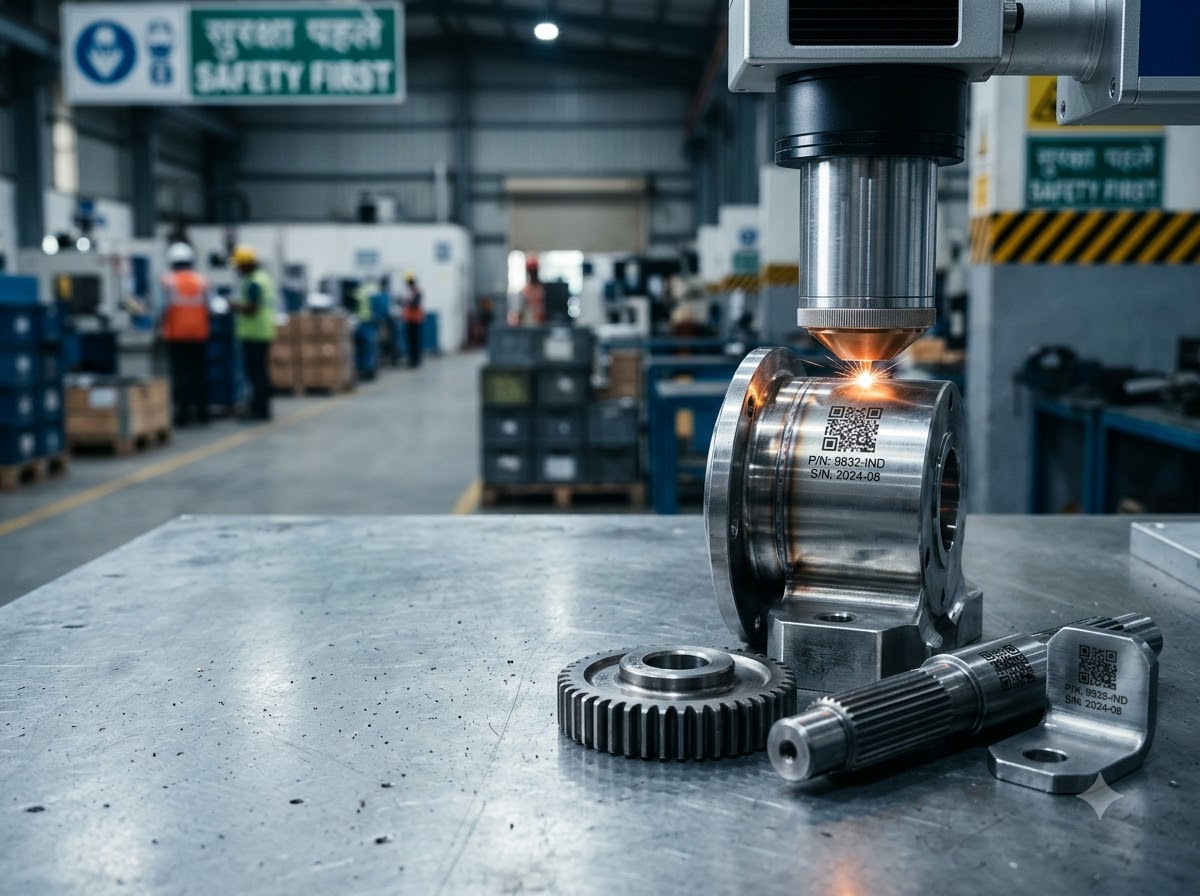
The short answer: a fiber laser marking machine is the standard laser marking machine for metal parts. It marks serial numbers, batch codes, logos and QR codes directly on auto parts and industrial components, and the mark is permanent, so it survives handling, oil, heat and wear. Choose a MOPA fiber laser for colour marking on steel, a UV laser for sensitive plastics and glass, and a CO2 laser for organic and non-metal materials. This guide explains how laser marking supports traceability, compares the options and lists what to check before you buy a laser marking machine in India.
At Success Technologies, we are a laser marking machine manufacturer in India, based in Ahmedabad. We supply fiber laser marking machines to auto component makers, tool and hardware units, surgical instrument makers and other industries that need permanent identification on every part.
Why Traceability Needs Permanent Marking
Auto and engineering buyers increasingly expect each part to carry an identity that links it to a batch, date, machine or customer. Stickers and ink can rub off, smudge or peel. A laser mark becomes part of the surface, so the code stays readable through the part's working life.
- Serial numbers: A unique number on each part for warranty and service tracking.
- Batch and date codes: Link a part to a production lot, shift or raw material heat.
- QR codes and Data Matrix codes: Store more information in a small area and are read quickly by scanners.
- Logos and part numbers: Brand identity and drawing references on the part itself.
A serial number, batch code and QR code laser marking machine can also generate these codes automatically from software, so numbers increment or import from a database without manual typing.
Which Laser Marking Machine for Metal Parts?
Fiber laser marking machine
The fiber laser is the default for metal. It marks stainless steel, carbon steel, aluminium, brass, copper, titanium and many coated metals. It also marks some hard plastics. It needs little maintenance and suits continuous industrial use.
MOPA fiber laser marking machine
A MOPA fiber laser marking machine lets you adjust the pulse duration separately, which gives finer control over the mark. It is chosen for colour marking on stainless steel, dark contrast marks on aluminium and marking on thin or sensitive surfaces.
UV laser marking machine
A UV laser marking machine uses a cold, short-wavelength beam with little heat effect. It suits plastics, glass, some films and heat-sensitive parts where a fiber laser could damage the material.
CO2 laser marking machine
A CO2 laser marking machine is meant for non-metals such as wood, leather, acrylic, paper, rubber and some plastics. It is not the tool for bare metal.
20W, 30W, 50W or 100W: How Much Power?
- 20W and 30W fiber laser marking machine: Surface marking, serial numbers, QR codes and logos on most metals.
- 50W fiber laser marking machine: Faster marking and deeper marks where cycle time matters.
- 100W fiber laser marking machine: Deep engraving and high-throughput work, such as moulds, dies and tools.
More power is not always better. For fine QR codes on thin parts, control and beam quality matter more than raw wattage. A sample test on your own part is the reliable way to choose.
Machine Formats: Desktop, Portable, Split, Enclosed and Online
- Desktop fiber laser marking machine: Compact bench-top unit for workshops and small parts.
- Portable or handheld laser marking machine: Moves to the part, useful for large or fixed components that cannot be brought to the machine.
- Split type vs enclosed laser marking machine: A split type separates the laser source from the marking head for flexible mounting. An enclosed machine houses the beam in a protective cabinet, which helps with operator safety and shop-floor use.
- Online or conveyor laser marking machine: Fits on a production line and marks parts as they pass, with sensors or automation.
- Rotary attachment laser marking machine: Turns round parts such as shafts, pins, pipes and bearings so the mark wraps around the surface.
Applications: Auto Parts and Industrial Components
- Laser marking machine for auto parts and components: Engine and transmission parts, fasteners, brackets, pistons, gears, shafts, brake parts and sheet metal parts carrying part numbers, batch codes and QR codes.
- Laser marking machine for metal and stainless steel: Corrosion-resistant marks on stainless steel, with colour marking on MOPA machines.
- Laser marking machine for logo printing on metal: Permanent brand marks on nameplates, tools and finished products.
- Laser marking on tools and hardware: Hand tools, cutters and fasteners. This is a strong market in Rajkot; see our Rajkot page for local support.
- Laser marking on ceramic and sanitaryware: Identification codes and logos for the Morbi ceramic cluster; see Morbi.
- Laser marking machine for surgical instruments: Clean, permanent identification on stainless steel instruments.
- Laser marking on plastic and PVC pipes: Batch, size and standard markings on pipes and fittings.
- Laser marking machine for kitchenware and utensils: Logos and capacity marks on steel and aluminium utensils.
- Jewellery laser marking machine: Fine hallmarks and logos on gold and silver.
- Deep engraving fiber laser for moulds and dies: Part numbers and cavity numbers on mould steel. For mould machining see our CNC mould and die making machine.
Laser Type Comparison
| Factor | Fiber | MOPA fiber | UV | CO2 |
|---|---|---|---|---|
| Best for | Metals | Colour marks, fine or sensitive metal surfaces | Plastic, glass, heat-sensitive parts | Wood, leather, acrylic, paper |
| Metal parts | Yes | Yes | Limited | No (bare metal) |
| Serial numbers and QR codes | Yes | Yes, with more mark control | Yes, on suitable materials | Yes, on non-metals |
| Heat effect | Moderate | Adjustable | Very low | Moderate |
| Relative cost | Base | Higher than standard fiber | Higher than base | Varies by tube and size |
Making Marks That Scan Reliably
- Surface finish: Rough, shiny or oily surfaces change contrast. Test on a real part, not a clean sample plate.
- Code size and quiet zone: Keep the code large enough for your scanner and leave clear space around it.
- Marking depth and contrast: Adjust power, speed and frequency to balance readability with the part's finish and strength.
- Verification: Check codes against your customer's requirement with a scanner or verifier before starting a full batch.
- Software: Look for support for serial number increment, date codes, database import and common code formats.
What Affects Fiber Laser Marking Machine Price in India?
Laser power is only one part of the cost. The factors that most affect a quotation are:
- Laser type and power: Fiber or MOPA, and 20W to 100W.
- Source brand and marking head: Beam quality and service life.
- Marking area and lens: Field size and the range of part sizes.
- Format: Desktop, portable, split type or enclosed.
- Integration: Rotary attachment, conveyor, sensors or automation.
- Software: Code generation and database features.
- Installation, training and warranty: Coverage and service response.
Compare quotations on the same configuration and ask what is included. To get a price for your requirement, request a quotation with your material, part size and daily volume.
How to Choose a Laser Marking Machine Manufacturer in India
- Sample marking: Ask them to mark your own part and scan the code.
- Specifications in writing: Laser type, power, marking area, software and accessories documented.
- Training and support: Software training and who supports you after installation.
- Spare parts and warranty: What is covered and how quickly parts arrive.
- Room to upgrade: Ask whether a rotary or conveyor can be added later.
Success Technologies has been manufacturing machines in Ahmedabad since 2013, and our team can suggest a configuration for your material and volumes.
Frequently Asked Questions
Which laser marking machine is best for metal parts?
A fiber laser marking machine is the standard choice for marking metal parts such as steel, stainless steel, aluminium, brass and many alloys. It produces permanent, high-contrast marks for serial numbers, batch codes, logos and QR codes. A MOPA fiber laser adds finer control for colour marking on stainless steel and for delicate surfaces.
Can a laser marking machine make QR codes and Data Matrix codes on auto parts?
Yes. A serial number, batch code and QR code laser marking machine can mark QR codes, Data Matrix codes, barcodes and text directly on the part. Code quality depends on the surface finish, the laser settings and the marking software, so verify readability with your scanner on a sample part.
What is the difference between a fiber and a MOPA fiber laser marking machine?
Both use a fiber laser source. A MOPA fiber laser lets you adjust pulse duration independently, which gives more control over mark appearance. This is why it is used for colour marking on stainless steel, dark marking on aluminium and marking sensitive coatings. A standard fiber laser is usually enough for plain black or white marks on most metals.
Should I choose a 20W, 30W, 50W or 100W fiber laser marking machine?
Lower power such as 20W or 30W suits surface marking, serial numbers and QR codes. Higher power such as 50W or 100W is chosen for faster marking and for deeper engraving on tools, moulds and dies. The right power depends on your material, mark depth and cycle time, so a sample test is the reliable way to decide.
Can laser marking be done on a running production line?
Yes. An online or conveyor laser marking machine is integrated with a production line, often with sensors and automation so each part is marked as it passes. For cylindrical parts, a rotary attachment laser marking machine turns the part while marking.
What affects the fiber laser marking machine price in India?
Price depends on laser power and type (fiber or MOPA), source brand, marking area and lens, machine format (desktop, portable, split type or enclosed), rotary or conveyor integration, software, and installation, training and warranty. A written quotation for your requirement is the accurate way to compare.
Conclusion: Match the Laser to Your Parts
Start from the part and the code you need. Metal parts with serial numbers and QR codes point to a fiber laser marking machine, colour or delicate marking points to MOPA, plastics and glass point to UV, and line production points to an online or conveyor setup. Define your material, part size, code format and volume first, then confirm with a sample mark before you buy.
Explore our fiber laser marking machine range, then request a quotation or sample marking, or message us on WhatsApp.