
Laser Engraving vs Laser Marking: Differences, Uses & Which Machine You Need
Laser engraving and laser marking are often used as if they mean the same thing, but they are different processes with different results. If you are about to invest in a laser machine for trophies, signage, jewellery, industrial parts or product traceability, knowing the difference between laser engraving vs laser marking will save you money and prevent the wrong machine choice.
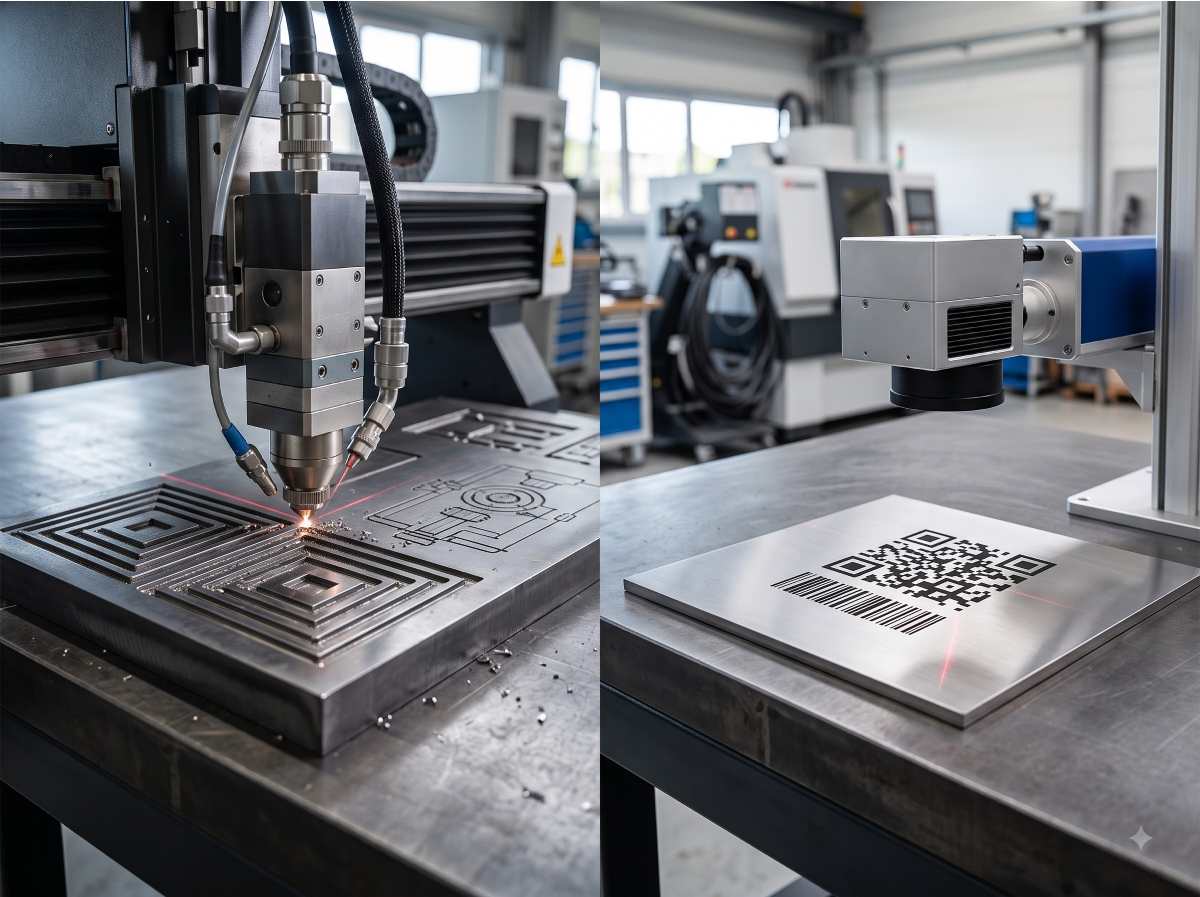
In simple terms, laser engraving removes material to create a physical groove, while laser marking changes the surface of the material to create a visible mark, usually without cutting deep into it. Both are permanent, non-contact and computer-controlled, but they suit very different jobs.
As a manufacturer of CNC and laser machines, Success Technologies offers Laser Engraving Machines and Fiber Laser Marking Machines for workshops, factories and exporters across India and overseas. This guide explains how each process works, where it is used, and how to choose.
What is Laser Engraving?
Laser engraving uses a focused, high-energy laser beam to vaporize or burn away the material surface, leaving a cavity or groove that forms the text, logo or pattern. Because material is physically removed, you can feel the design with your fingertip, and the depth can be increased by running multiple passes.
Engraving is the right choice when the design must survive heavy wear, be visible from a distance, or add a tactile, premium look to the product.
Key Features
- Creates visible, physical depth in the material
- Highly durable and resistant to wear, abrasion and repainting
- Depth can be controlled with power, speed and number of passes
- Excellent for decorative, artistic and tactile finishes
- Slower than marking because material is being removed
Commonly Engraved Materials
- Wood and MDF
- Acrylic
- Leather
- Glass and crystal
- Marble, granite and stone
- Metals (with a high-power fiber laser)
What is Laser Marking?
Laser marking uses a laser to change the surface appearance of a material without removing a significant amount of it. Depending on the material and laser settings, the mark may come from a colour change, surface oxidation, foaming of plastic, or very shallow surface ablation.
The result is a crisp, high-contrast and permanent mark that is ideal for identification and traceability, and it is produced very quickly. This is why fiber laser marking is standard in manufacturing lines.
Key Features
- Very fast marking speed for high-volume production
- Fine detail for small text, QR codes, barcodes and Data Matrix codes
- Minimal material removal, so the part’s strength is largely unaffected
- Smooth surface with no noticeable depth
- Low running cost and very little maintenance
Common Types of Laser Marking
- Annealing: heat creates a dark, oxide-based mark on metals such as stainless steel without cutting into the surface
- Colour change / foaming: used on certain plastics to create light or dark marks
- Surface ablation: removes a thin coating, such as paint or anodizing, to expose the base material
Laser Engraving vs Laser Marking: Quick Comparison
The table below summarises the main differences between laser engraving and laser marking.
| Feature | Laser Engraving | Laser Marking |
|---|---|---|
| Process | Removes material to form a groove | Changes surface colour, contrast or texture |
| Depth | Visible, can be felt | Little to none |
| Speed | Slower | Very fast |
| Durability | Excellent, survives heavy wear | Permanent, suited to normal wear |
| Best For | Decorative, artistic, deep and tactile designs | Serial numbers, barcodes, QR codes, logos |
| Typical Materials | Wood, acrylic, leather, glass, stone, metal | Metals, anodized aluminium, coated surfaces, many plastics |
| Typical Machine | Laser engraving machine (high-power for deep engraving) | Fiber laser marking machine |
| Effect on Part Strength | Slight, because material is removed | Minimal |
| Ideal Production | Custom, low to medium volume | High-volume, repeatable, automated |
Depth, Durability and Appearance
The biggest visual difference is depth. An engraved design has a cut you can feel, and it holds up even if the surface is scratched, painted or polished. This is why engraving is preferred for nameplates in harsh environments, tools, dies and decorative products.
A laser mark sits at or just beneath the surface. It is still permanent and will not rub off with normal handling, but it is not designed for parts that will be heavily ground or re-finished. For most identification needs, such as part numbers, logos and codes, that is more than enough.
Speed and Production Volume
Because marking removes little or no material, it is far quicker than engraving, and it can be integrated with conveyors and automated lines. If you are labelling hundreds or thousands of parts every day, a fiber laser marking machine will usually give you a much lower cost per part.
Engraving takes longer, especially when deep cuts need multiple passes. It makes more sense for customized, higher-value items such as awards, signage, gifts and artistic pieces, where finish and depth matter more than raw speed.
Material Compatibility
The laser source matters as much as the process. A CO2 laser is excellent on organic and non-metallic materials, while a fiber laser is designed for metals and many plastics.
Best Suited to Laser Engraving
- Wood, MDF and plywood
- Acrylic and plastics
- Leather and fabric
- Glass, crystal and ceramic
- Marble, granite and other stone
Best Suited to Laser Marking (Fiber Laser)
- Stainless Steel
- Mild and Carbon Steel
- Aluminium and Anodized Aluminium
- Brass and Copper
- Titanium
- Many engineering plastics
Results always depend on the exact alloy, coating and laser settings, so it is best to test a sample before committing to a machine.
Applications and Industries
Both processes are used across many industries, but they usually serve different needs.
Where Laser Engraving Is Used
- Trophies, awards and gifts
- Signage and nameplates
- Wood craft and furniture decoration
- Glass and crystal personalization
- Stone and memorial engraving
- Leather goods and packaging
- Tools, dies and mould identification
Where Laser Marking Is Used
- Automotive and auto-component part identification
- Serial numbers, barcodes and QR codes
- Electrical and electronic components
- Medical and surgical instruments
- Jewellery hallmarking and branding
- Hardware, tools and bearings
- Anti-counterfeiting and traceability marks
Explore more real-world uses on our Applications page.
Which Machine Do You Need?
Choose a laser engraving machine if you work with wood, acrylic, glass, leather or stone, create customized products, or need real depth and a premium, tactile finish. It is a great fit for gift shops, signage makers, trophy manufacturers and craft businesses.
Choose a fiber laser marking machine if you mark metals or plastics, need traceability codes, or must process large volumes quickly and consistently. It is the standard choice for engineering units, auto-component makers, tool manufacturers and jewellers.
If your work includes both light marking and shallow engraving on metals, a fiber laser can often handle both. If you also need to cut sheet metal, take a look at our Fiber Laser Cutting Machine range.
Questions to Ask Before Buying
- Which materials will I process most often?
- Do I need visible depth, or only a clear, permanent mark?
- How many pieces do I need to process every day?
- What working area and part size do I need?
- Do I need codes, serial numbers or detailed artwork?
- What is my budget for both purchase and running cost?
Frequently Asked Questions
Is laser marking the same as laser engraving?
No. Engraving removes material to create depth, while marking changes the surface appearance with little or no material removal. Engraving is also sometimes described as a type of laser marking, but in practice the two give different results.
Which is more permanent?
Deep engraving is the most durable because the design is physically cut into the material. Quality laser marking, such as annealing on stainless steel, is also permanent and highly resistant to normal wear.
Can I laser mark bare metal with a CO2 laser?
Not directly in most cases. CO2 lasers are best for non-metals. For marking bare metals, a fiber laser is the recommended and far more effective choice.
Can one machine do both?
Many fiber laser machines can perform light engraving and marking on metals, depending on power and settings. For deep engraving on wood, acrylic, glass or stone, a dedicated laser engraving machine is usually the better option.
Why Choose Success Technologies?
Success Technologies has manufactured CNC and laser machines since 2013 from Ahmedabad, Gujarat, with installations across 30+ countries. We help you pick the right machine for your material, volume and budget, instead of selling you more than you need.
Our Strengths
- In-house CNC and laser machine manufacturing
- Machine recommendation based on your application
- Sample testing on your material
- Installation and operator training
- Reliable technical support and after-sales service
- Customized machine solutions
Whether you need a Laser Engraving Machine or a Fiber Laser Marking Machine, our engineers will guide you to the right choice. Contact Success Technologies today — Get a Quotation or message us on WhatsApp.